
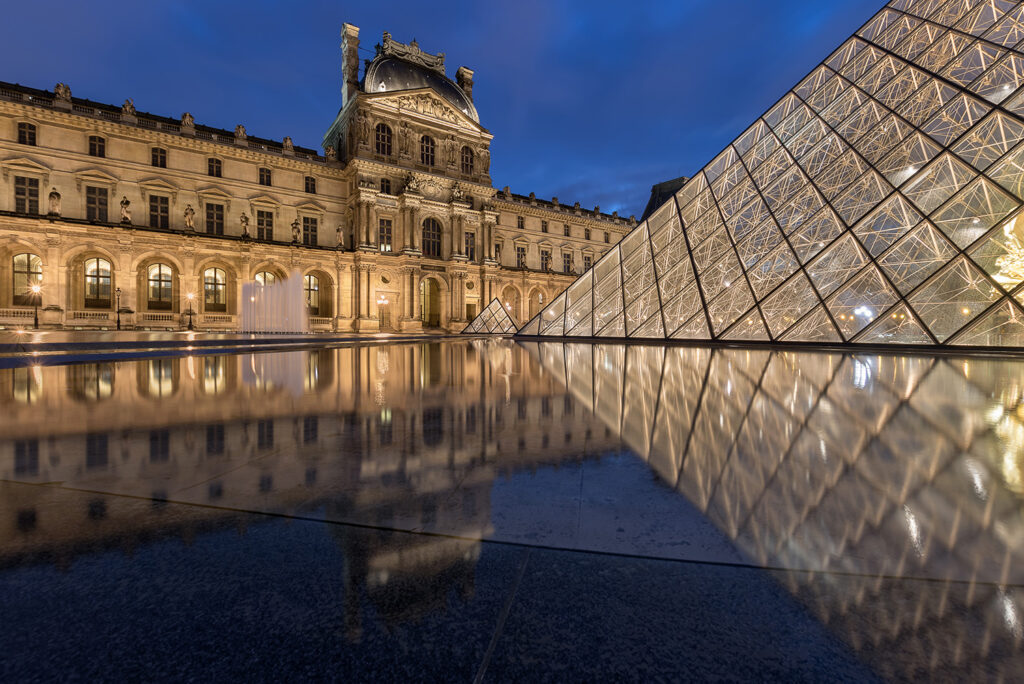
Night photography is as fascinating as it is intimidating. Yet with
the right settings and a little patience, it opens up an extraordinary
creative field. Cédric Puisney, no stranger to low-light shoots,
explains how to tame the night.
Understanding exposure
At night, the camera lacks light. To compensate, you play with three
parameters: aperture, shutter speed and ISO sensitivity. Cédric
recommends starting with a wide aperture (f/2.8 or f/4), a slow
shutter speed (between 5 and 30 seconds) and a moderate ISO (800
to 3200 depending on the camera) to limit digital noise.
The tripod, essential
Without a tripod, night photography is impossible. With shutter
speeds of several seconds, the slightest movement creates blur.
Cédric also uses a remote shutter release or the camera’s self-timer
to avoid touching it at the moment of shooting.
Finding the right spots
Cities offer abundant artificial light — ideal for beginners.
Reflections on wet cobblestones, light trails from cars, illuminated
facades are all fascinating subjects. For starry skies, you need
to escape light pollution and move away from urban centres.
Patience as a tool
Night photography takes time. You have to test, adjust, try again.
Cédric sometimes spends several hours at the same spot to get the
perfect shot. This slowness is also what makes the discipline so
rewarding.
Night transforms familiar places into almost magical settings.
An ordinary street becomes mysterious, a plain bridge adorned with
golden reflections. You just have to dare to go out after sunset
and let the camera do its work.